
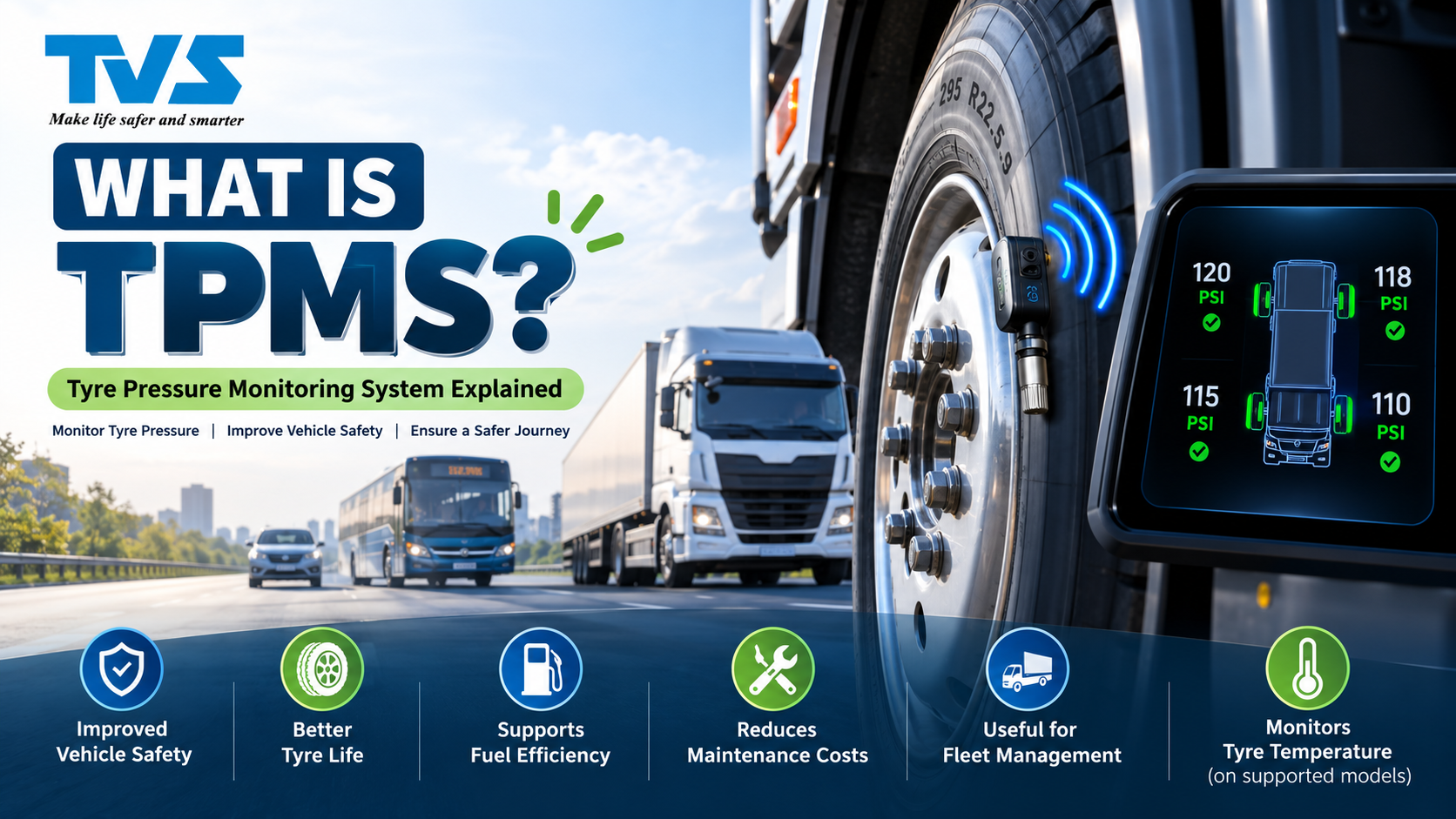
🚗 Did you know? Incorrect tyre pressure can affect vehicle handling, tyre life and fuel efficiency. But how can drivers identify tyre pressure problems while travelling?
The answer is TPMS (Tyre Pressure Monitoring System) — a vehicle monitoring technology that helps drivers identify abnormal tyre pressure and take action before problems become more serious.
From passenger cars to trucks, buses and commercial fleets, TPMS plays an important role in modern vehicle monitoring.
Let’s understand how it works, its benefits and why it matters! 👇
🔍 What Is TPMS?
TPMS stands for Tyre Pressure Monitoring System.
It is an electronic system that monitors the air pressure inside a vehicle’s tyres and alerts the driver when pressure falls outside specified limits.
Depending on the model, TPMS may also monitor tyre temperature and display individual tyre readings.
✅ Helps identify abnormal tyre pressure ✅ Supports better tyre maintenance ✅ Helps drivers make informed decisions ✅ Useful for cars, trucks, buses and commercial vehicles
⚙️ How Does a Tyre Pressure Monitoring System Work?
TPMS generally works through two technologies:
1️⃣ Direct TPMS — Measures Actual Tyre Pressure
Direct TPMS uses sensors installed inside the tyres or attached to the tyre valves. These sensors measure pressure and transmit readings to a display or monitoring unit.
Key features may include:
📊 Actual tyre pressure readings
⚠️ Low-pressure and high-pressure alerts
🛞 Individual tyre monitoring
🌡️ Temperature monitoring on supported models
Best suited for: Drivers who need actual tyre pressure readings.
2️⃣ Indirect TPMS — Detects Possible Pressure Changes
Indirect TPMS uses wheel-speed sensors, typically associated with the vehicle’s ABS system, to identify changes that may indicate incorrect tyre pressure.
Unlike direct TPMS, it does not directly measure the air pressure inside each tyre.
Key point: Its detection capabilities depend on the vehicle’s system and operating conditions.
⭐ 6 Major Benefits of TPMS
🛡️ 1. Supports Vehicle Safety
Incorrect tyre pressure can affect handling, stability and braking performance. TPMS alerts help drivers identify pressure problems and take corrective action.
🛞 2. Helps Maintain Tyre Life
Maintaining the recommended tyre pressure can help reduce uneven tyre wear and unnecessary tyre damage.
⛽ 3. Supports Fuel Efficiency
Underinflated tyres can increase rolling resistance and fuel consumption. TPMS helps drivers identify low-pressure conditions so they can correct them.
🔧 4. Helps Reduce Maintenance Costs
Identifying tyre pressure problems early can help prevent avoidable damage and support more effective vehicle maintenance.
🚚 5. Useful for Fleet Management
Transport companies can use suitable TPMS solutions to monitor tyre conditions and identify issues requiring attention.
🌡️ 6. Monitors Tyre Temperature on Supported Models
Some TPMS models also monitor tyre temperature and alert drivers when readings exceed specified limits.
🚛 Why Is TPMS Important for Trucks, Buses & Commercial Vehicles?
Heavy commercial vehicles often travel long distances and operate under varying load conditions. Incorrect tyre pressure can affect tyre performance, handling and operating costs.
A TPMS for trucks and buses can help drivers monitor tyre pressure and identify which tyre requires attention, depending on the system's capabilities.
Key advantages for fleet operators:
✅ Better tyre maintenance planning ✅ Early identification of abnormal pressure ✅ Improved visibility of tyre conditions ✅ Potential reduction in tyre-related delays ✅ Support for efficient fleet operations
💡 Important: Heavy vehicles may have multiple axles and tyres. Always select a system that supports the vehicle’s tyre configuration, sensor requirements and operating conditions.
⚖️ Direct TPMS vs Indirect TPMS
Feature
Direct TPMS
Indirect TPMS
Working method
Measures tyre pressure using sensors
Uses wheel-speed data
Actual pressure readings
Yes
Generally no
Pressure sensors
Required
Uses compatible vehicle sensors
Main purpose
Direct pressure monitoring
Detects possible underinflation
Compatibility
Depends on the system
Depends on the vehicle
📌 Which is better? Direct TPMS is generally suitable when actual tyre pressure readings are required. The right choice depends on vehicle compatibility and monitoring needs.
🛠️ How to Choose the Right TPMS
Before buying a Tyre Pressure Monitoring System, check these important factors:
🔹 Vehicle type: Car, truck, bus or commercial vehicle.
🔹 Sensor compatibility: Confirm the supported sensor type and installation method.
🔹 Number of tyres: Multi-axle vehicles may need monitoring for more tyres.
🔹 Display and alerts: Choose a system with clear readings and understandable warnings.
🔹 Temperature monitoring: Confirm whether this feature is included if needed.
🔹 Installation and support: Check installation requirements, warranty and after-sales service.
⚠️ Safety tip: Always follow the vehicle manufacturer’s recommended tyre pressure and inspect tyres regularly. TPMS supports tyre maintenance but does not replace it.
🏢 Explore Vehicle Safety Solutions from TVS Security
Looking for vehicle security and monitoring technology?
TVS Security provides vehicle security and monitoring solutions for different automotive applications. Businesses can explore the available products and contact the team to discuss their requirements.
For TPMS specifically, confirm product availability, sensor compatibility and supported vehicle types before purchasing.
🔗 Connect with TVS Security:
🌐 Official Website: https://www.tvssecurity.com/index
🚘 Explore Products: https://www.tvssecurity.com/products
📸 Instagram: https://www.instagram.com/tvssecurity?stkn=MTJzbzVkdnZwbG94dQ==
▶️ YouTube: https://www.youtube.com/@tvs.aisecurity
❓ Frequently Asked Questions About TPMS
🔹 1. What is the full form of TPMS?
TPMS stands for Tyre Pressure Monitoring System. It monitors tyre pressure and alerts drivers when abnormal pressure is detected.
🔹 2. How does TPMS work in a vehicle?
Direct TPMS measures actual tyre pressure using sensors, while indirect TPMS uses wheel-speed information to detect changes that may indicate underinflation.
🔹 3. Can TPMS improve fuel efficiency?
TPMS can alert drivers to underinflated tyres. Maintaining the recommended tyre pressure can help reduce unnecessary rolling resistance and support fuel efficiency.
🔹 4. Is TPMS useful for trucks and buses?
Yes. A compatible TPMS can help monitor tyre pressure in trucks, buses and other commercial vehicles, depending on the system's capabilities.
🔹 5. Does TPMS replace manual tyre pressure checks?
No. Drivers should continue inspecting tyres and checking pressure according to the vehicle manufacturer’s recommendations.
🔹 6. What is the difference between direct and indirect TPMS?
Direct TPMS measures actual tyre pressure through sensors, whereas indirect TPMS uses wheel-speed data to identify changes that may indicate underinflation.
✅ Conclusion: Why Is TPMS Important?
A Tyre Pressure Monitoring System (TPMS) helps drivers identify tyre pressure problems and make informed maintenance decisions.
Whether you drive a passenger car or manage a fleet of trucks and buses, selecting the right TPMS can support tyre maintenance, vehicle safety and operational efficiency.
🚘 Choose the right monitoring technology for your vehicle. Explore vehicle safety solutions with TVS Security!